Mammals · plate 1 of 60
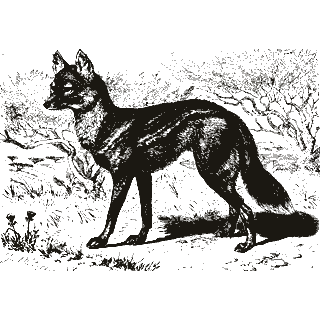
Wolf
Canis lupus
Family first, thirty kilometers second, everyone else third.
Only 0.9% of people are Wolves. (estimated)
If you're a Wolf
You are built for a group, but a specific one. You would cross a province for the people you have chosen and barely nod at anyone else. You work hard, mostly in company, and you go quiet when you need to think. The lone wolf reputation is a misunderstanding; a wolf on its own is usually just looking for the rest of the pack.
A wild wolf pack is almost always a family, two parents and their offspring from the last few years, which is why the alpha idea, borrowed from captive packs of strangers, has been quietly retired by the researchers who popularized it.
The Wolf as a spirit animal
You hold a small circle very tightly and the rest of the world loosely. Your loyalty is practical: you show up, you share the food, you walk the extra distance. The flaw is that you need the circle to function, and you tend to treat newcomers as a problem to be assessed from a ridge. Those who are in, are in. Everyone else can hear you from a long way off.
Grounded in how the species actually lives; nothing borrowed from anyone's tradition. Why we put it that way.
How to get along with a Wolf
Do
- Be consistent; wolves run on routine and read any break in it as news.
- Eat with them. Shared meals are the entire social contract.
- Let them walk off the day; the pacing is thinking, not sulking.
Don't
- Don't flatter your way into the inner circle. It is earned over years and noticed in weeks.
- Don't threaten the group to get at the individual; the whole pack turns at once.
When it goes wrong: A cornered wolf goes silent and still before anything else; back off, lower your voice, and let the pack settle it.
The Wolf in a relationship
You pair for the long haul and you mean it. Wild wolves usually breed as a single pair, and the two run the family together for years. You are not quick to commit, but once you have, your partner's problems are logistics you handle. Romance, for you, is bringing back dinner.


Field notes
Every animal is placed on six personality traits derived from how the species lives. Your answers are placed on the same six, and the closest animal wins. How the scoring works
- Sociability
- 8
- Boldness
- 7
- Energy
- 7
- Curiosity
- 6
- Devotion
- 9
- Roaming
- 8
- Wolves routinely travel 30 km or more in a day while hunting, and dispersing young wolves have been tracked over 1,000 km from where they were born.
- Older siblings help raise the pups, carrying food back to the den and regurgitating it for them.
- A howl carries for several kilometers in open country, and each wolf's howl is distinct enough that packmates recognize who is calling.
Wolves in literature
- Akela — The Jungle Book, Rudyard Kipling (1894)
- White Fang — White Fang, Jack London (1906)
- The Wolf — Little Red Riding Hood, Charles Perrault (1697)
Characters from public-domain works. Company, not a verdict.
Closest personalities
The animals whose profiles sit nearest to the Wolf's. If you got Wolf, one of these was probably your runner-up.


Other mammals
Red FoxBrown BearPolar BearLionTigerLeopardCheetahElephantGiraffeHippopotamusGorillaOrangutanSlothKoalaKangarooPlatypusOtterBeaverBadgerRaccoonHedgehogBatCamelDolphinSperm Whale
Among the 60
Gustav Mützel (1839–1893), Brehm's Life of Animals, Alfred Brehm (1896). Public domain, viacommons.wikimedia.org.All credits
_(20387042836).jpg)